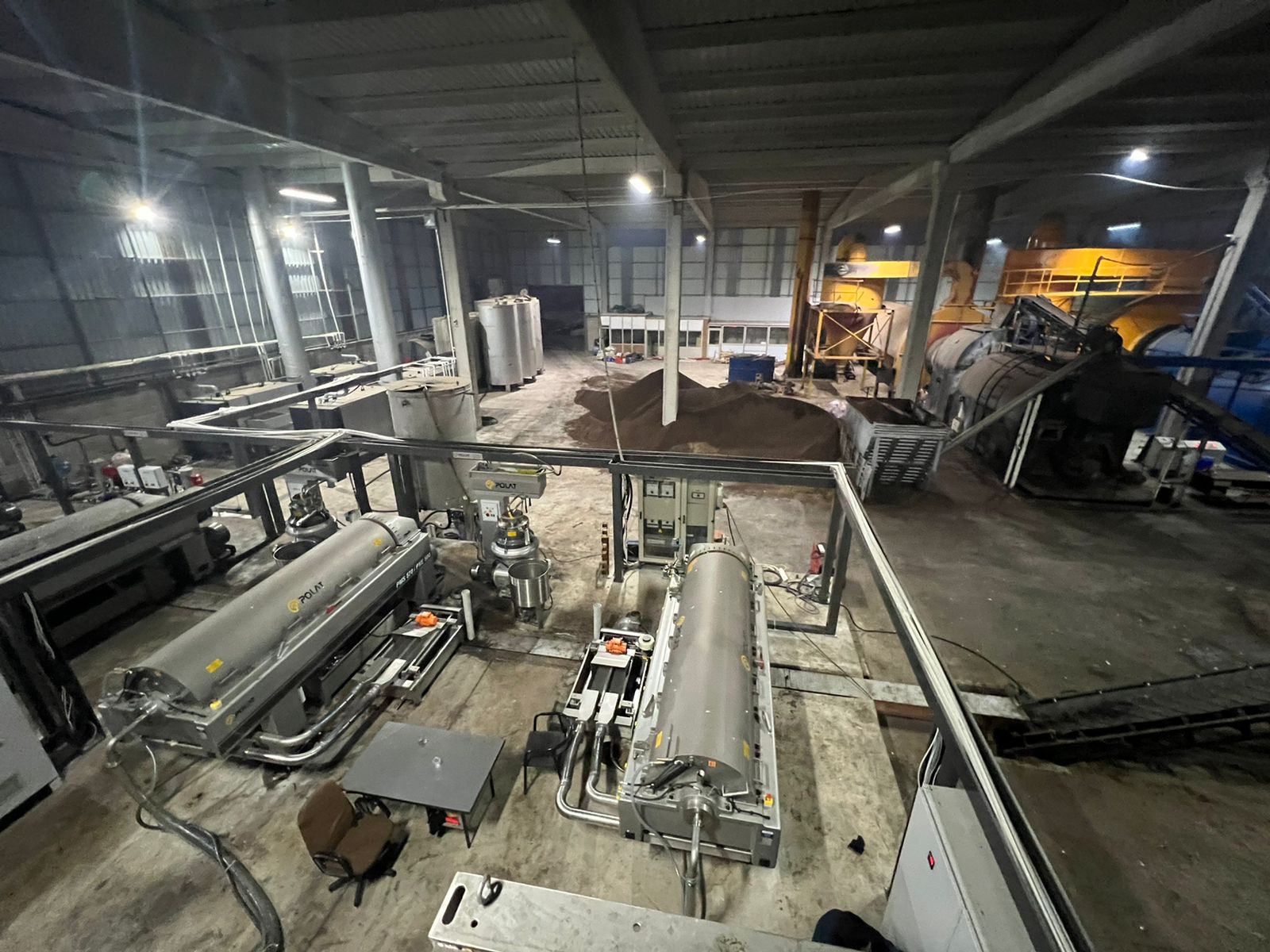
In one of the olive oil sector's largest byproduct processing plants,
our high-efficiency pomace decanter system with a capacity of 2,000 tons/day has been commissioned to bring high-moisture pomace received from olive oil mills back into the economy.
The main goal of the project is to recover the remaining olive oil droplets within the wet pomace with maximum efficiency and to achieve a dry pomace output with low moisture content, reducing the load on drying kilns.
Technical Process and Pomace Decanter Engineering
Pomace is one of the raw materials that imposes the greatest mechanical strain on equipment due to its high solid content and sticky structure:
Maximum Phase Separation via High G-Force: Specially armored, high-torque pomace decanters separate the dense solid phase, residual oil, and vegetation water with extreme precision under high centrifugal force.
Optimum Moisture Control and Dry Pomace Discharge: Thanks to the compaction and discharge geometry of the decanter, free water in the pomace is removed to the maximum level. This delivers high-dryness pomace at the facility output, facilitating the drying process.
Heavy-Duty Armoring Against Wear: To withstand the high mechanical wear caused by olive pit fragments (pomace flour/shell) within the pomace, the scroll (conveyor) and discharge points are protected with tungsten carbide armor coatings.
Key Deliverables and Added Value
Massive Raw Material Processing Capacity: Operating 24/7 without interruption throughout the season, the system processed a massive daily pomace input of 2,000 tons with zero unplanned downtime and high yield stability.
Huge Savings in Drying Energy: The high dryness ratio achieved at the decanter output significantly reduced the fuel and energy consumption of downstream drying kilns.
Complete Oil Recovery (Maximum Recovery): Nearly all residual oil within the pomace—otherwise considered waste—was reclaimed back into the ecosystem and industry, providing a high economic contribution to the facility.