
POLAT TECHNIC
Contact Our Technical Support Team Now
Keep your operations running smoothly with 24/7 service support and maintenance solutions.

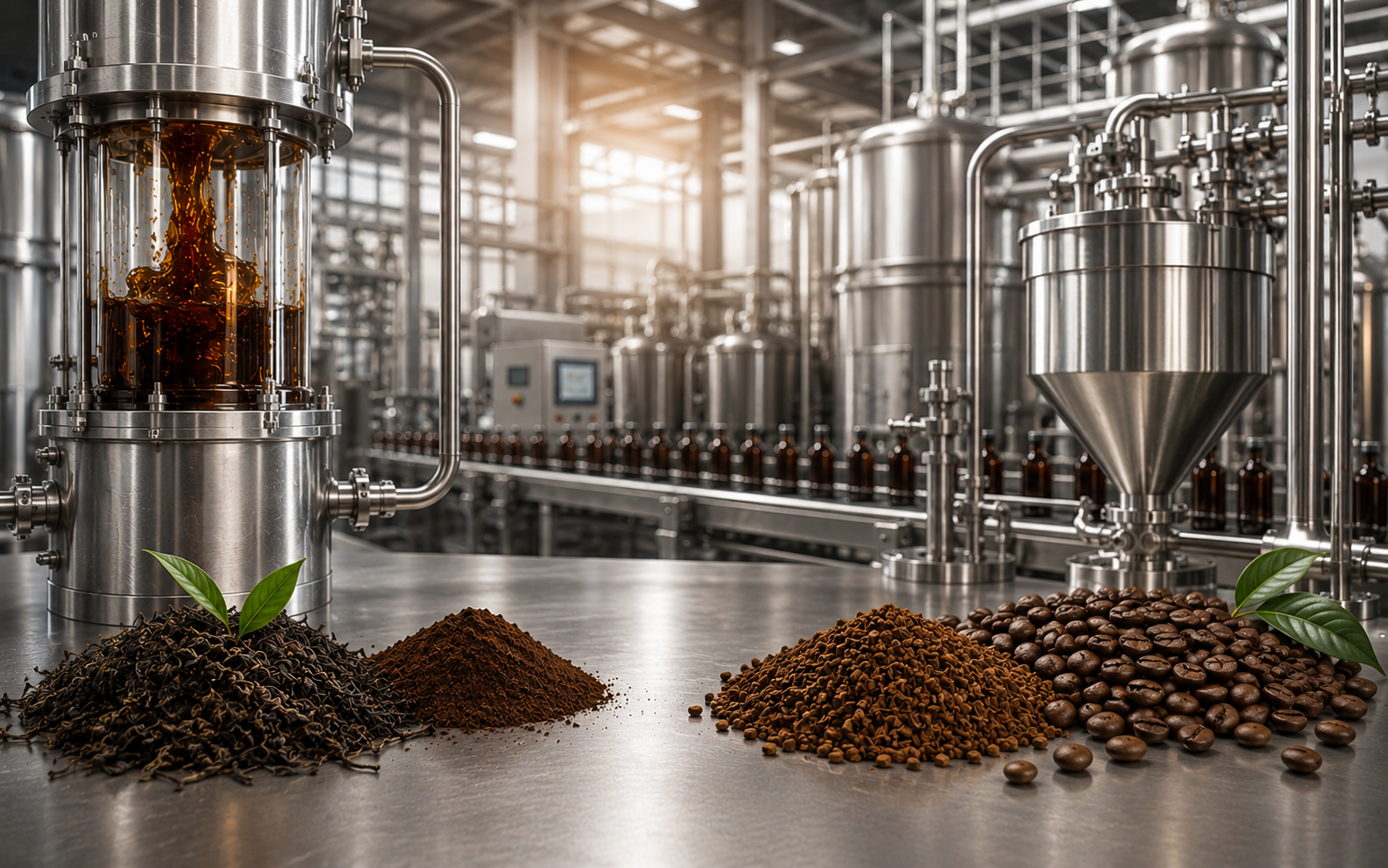
Polat Makina’s solutions maximize efficiency in coffee and tea production through high-G-force separation, hygienic design in line with EHEDG standards, and advanced clean-in-place (CIP) integration. From extraction to clarification, we help preserve each product’s distinctive aroma and flavor profile at every stage, setting new benchmarks for industrial processing standards.

Coffee is more than just an alternative; it is an essential part of modern life. As its popularity continues to grow, consumer expectations are rising accordingly. Today's consumers demand not only innovative recipes but also high quality, consistent flavor, and product reliability.
A significant share of global coffee production is processed into soluble (instant) coffee using advanced processing technologies. These technologies enable instant coffee to dissolve quickly and uniformly in water, delivering high efficiency and repeatable quality across critical process stages such as extraction, clarification, concentration, and drying. As consumption continues to rise, so does the demand for high-capacity, energy-efficient, and automation-driven production technologies in instant coffee manufacturing. At the same time, instant coffee producers face the challenge of making their production processes more efficient, sustainable, and competitive while meeting these evolving expectations.
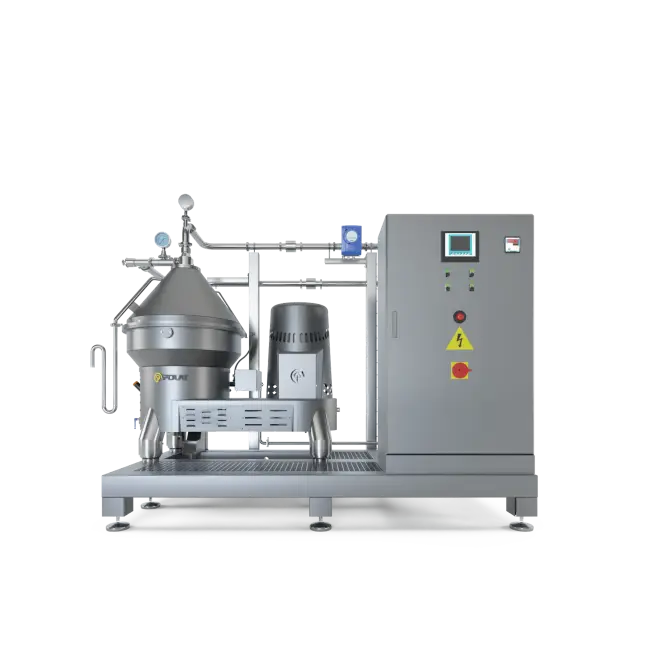
Following roasting and blending, coffee beans are ground under controlled conditions and extracted using hot water. The resulting crude coffee extract is cooled according to process requirements and fed into Polat Makina disc separators to remove suspended fine solid particles. This stage produces a clear and stable coffee extract.
The clarified coffee extract is then concentrated through evaporation and subsequently sent to the drying stage, where it is converted into soluble (instant) coffee.
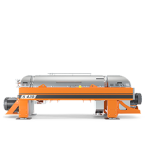
Meanwhile, the insoluble coffee grounds remaining after extraction are pressed to release the oil phase. This stream is processed using decanter centrifuges and separators to recover high-purity coffee oil. This approach increases product yield while transforming process by-products into value-added resources.
Designed to handle acidic and corrosive coffee extracts, Polat Centrifuge solutions feature high-G-force performance, hygienic construction, and CIP-compatible designs. They deliver maximum separation efficiency, process continuity, and operational reliability in instant and liquid coffee production.
To meet food safety and hygiene requirements, decanter and separator systems are manufactured with smooth surfaces and dead-zone-free designs in line with EHEDG principles. The equipment is fitted with fully integrated CIP (Clean-in-Place) systems that enable effective cleaning without dismantling the production line, ensuring hygienic production, shorter cleaning cycles, and high process continuity.

Driven by changing consumer habits and growing interest in functional beverages, the tea extract market has entered a period of rapid growth. Black, green, white, and herbal tea extracts are used across a wide range of applications, particularly in ready-to-drink (RTD) beverages, iced teas, concentrated products, and dietary supplements.
Consumers' expectations for natural ingredients, sustainable production, and consistent flavor are driving manufacturers toward more advanced processing technologies. In this context, high-efficiency extraction, precise clarification, and energy-efficient concentration solutions have become critical to tea extract production.
Growing demand brings not only the need for increased capacity but also stricter requirements for quality standardization, process control, and hygienic production. Modern tea extract facilities are investing in automation-driven, reliable, and scalable production technologies to keep pace with market growth. Through its advanced centrifuge technologies and process-oriented approach, Polat provides tea extract manufacturers with high efficiency, consistent quality, and sustainable production advantages.
Instant tea is produced by extracting tea leaves with water under controlled conditions. Following extraction, the resulting tea extract is clarified using centrifuge systems to remove suspended fibers and fine solid particles. Depending on process requirements, the clarified extract undergoes concentration through evaporation and is subsequently converted into powder through drying.
The resulting instant tea is a homogeneous product that dissolves rapidly and completely in water, preserves the tea's characteristic aroma and flavor profile, and leaves no sediment. These properties make it suitable both as a convenient instant beverage and as a versatile functional ingredient for the food and beverage industry.