POLAT TECHNIC
Contact Our Technical Service Team Now!
Keep your operations running smoothly with 24/7 technical support and maintenance solutions.


Every year, tonnes of fresh blood generated by the global livestock industry are transformed into blood meal, a hygienic, high-biological-value protein source with strong market potential, using Polat Makina’s advanced decanter technology. This recovery process strengthens the circular economy by turning an animal by-product into a valuable resource.

The growth of global cattle, sheep, poultry, and pig populations generates millions of tonnes of animal by-products at slaughterhouses every year. Fresh animal blood, one of these by-products, offers significant value-creation potential due to its high protein content when processed using appropriate technologies.
Blood meal production reduces the need for waste disposal by recovering this biological resource for use in animal feed, pet food, organic fertilizers, and agricultural applications. This process is not merely an environmental responsibility; it is also a strategic circular economy practice that maximizes resource efficiency. Transforming blood into a high-value raw material for non-food industries helps address growing global protein demand while aligning with the sustainability objectives of modern industrial agriculture.

Blood meal production relies on stringent hygiene standards and precise mechanical separation throughout every stage, from the collection of fresh blood to the grinding of the final product. Blood collected at the slaughterhouse is conditioned appropriately to control coagulation, then subjected to thermal coagulation to stabilize its protein structure.
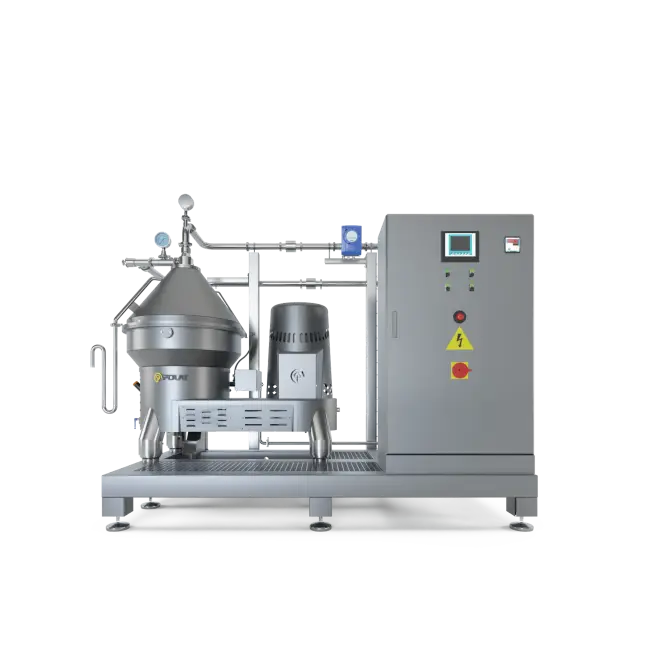
The resulting coagulated protein mass must be efficiently separated from the liquid phase. Polat Makina’s high-G-force decanter centrifuges perform this critical separation step. By managing dewatering continuously and efficiently, the decanters reduce the protein fraction’s moisture content to an optimal level for subsequent drying.
At the end of the process, the stable solid fraction is dried and ground to produce blood meal that meets industry standards and offers an extended shelf life. This closed-system approach minimizes biological risks while providing operators with a reliable process infrastructure designed to maximize protein recovery and operational profitability.