POLAT TECHNIC
Contact Our Technical Service Team Now
Keep Your Operations Running Smoothly with 24/7 Service Support and Maintenance Solutions.

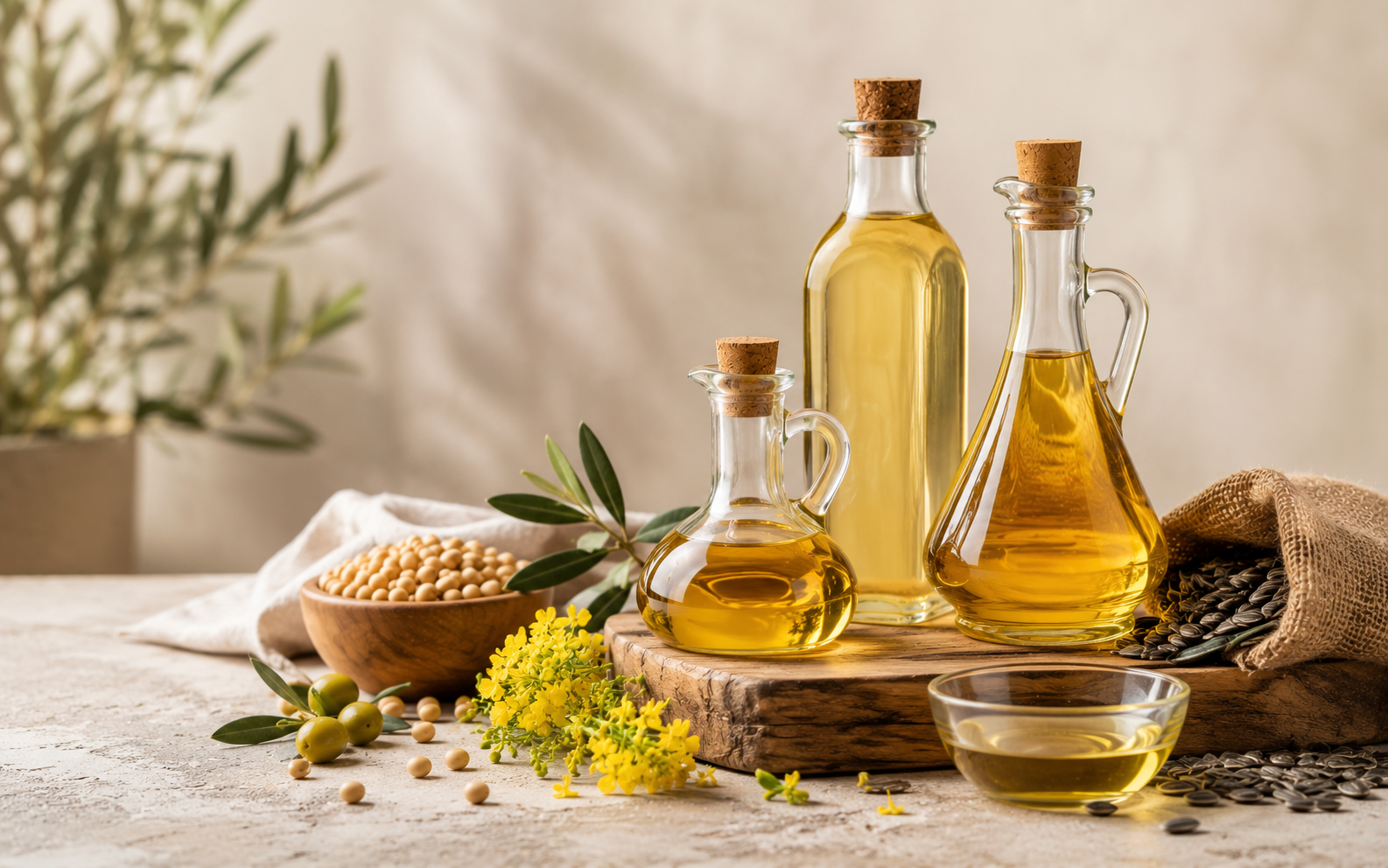

Plant oils are among the food industry's essential raw materials and are obtained from approximately 20 different oilseeds, including sunflower, soybean, hazelnut, flaxseed, mustard, cottonseed, rapeseed, and peanut. In efficient production processes, effective separation and high-quality processing directly influence the purity, flavour, and commercial value of the final product.
Before oil extraction begins, seeds are cleaned of stones, sand, metal, and plant residues using separation methods based on weight (pneumatic separation), size (screening), and magnetic properties (magnetic separation). Following shelling and size reduction, the seeds are conditioned in roasting pans using steam at 180–200°C.
Mechanical pressing, typically applied to seeds with an oil content below 20%, uses batch hydraulic presses, continuous screw presses, or rotary presses to recover approximately 50–60% of the oil contained in the seeds. This stage produces crude oil as the main product and oilseed meal containing approximately 18% residual oil as a by-product.

After pressing, the oil-rich press cake is passed through crushing machines and sent to the extraction unit. The crude oil is processed through drying equipment and centrifuges to remove moisture and sediment before being transferred to storage.
Removing impurities from stored crude oil before refining reduces the load on separator centrifuges and minimizes oil losses. Although conventional expeller oil clarification methods, such as plate-and-frame filter presses, can achieve acceptable clarity, they require considerable time and labor.
To reduce high operating costs, modern processing plants are increasingly replacing conventional filtration with fully automated decanter centrifuge systems. Oil containing up to 15% solids by volume is continuously fed into the decanter. The clarified oil is directed to refining, while the separated solids are returned for further pressing to recover residual oil.
Systems such as Polat Makina's self-cleaning decanter centrifuges enhance operational efficiency by enabling continuous operation for weeks with minimal maintenance requirements.