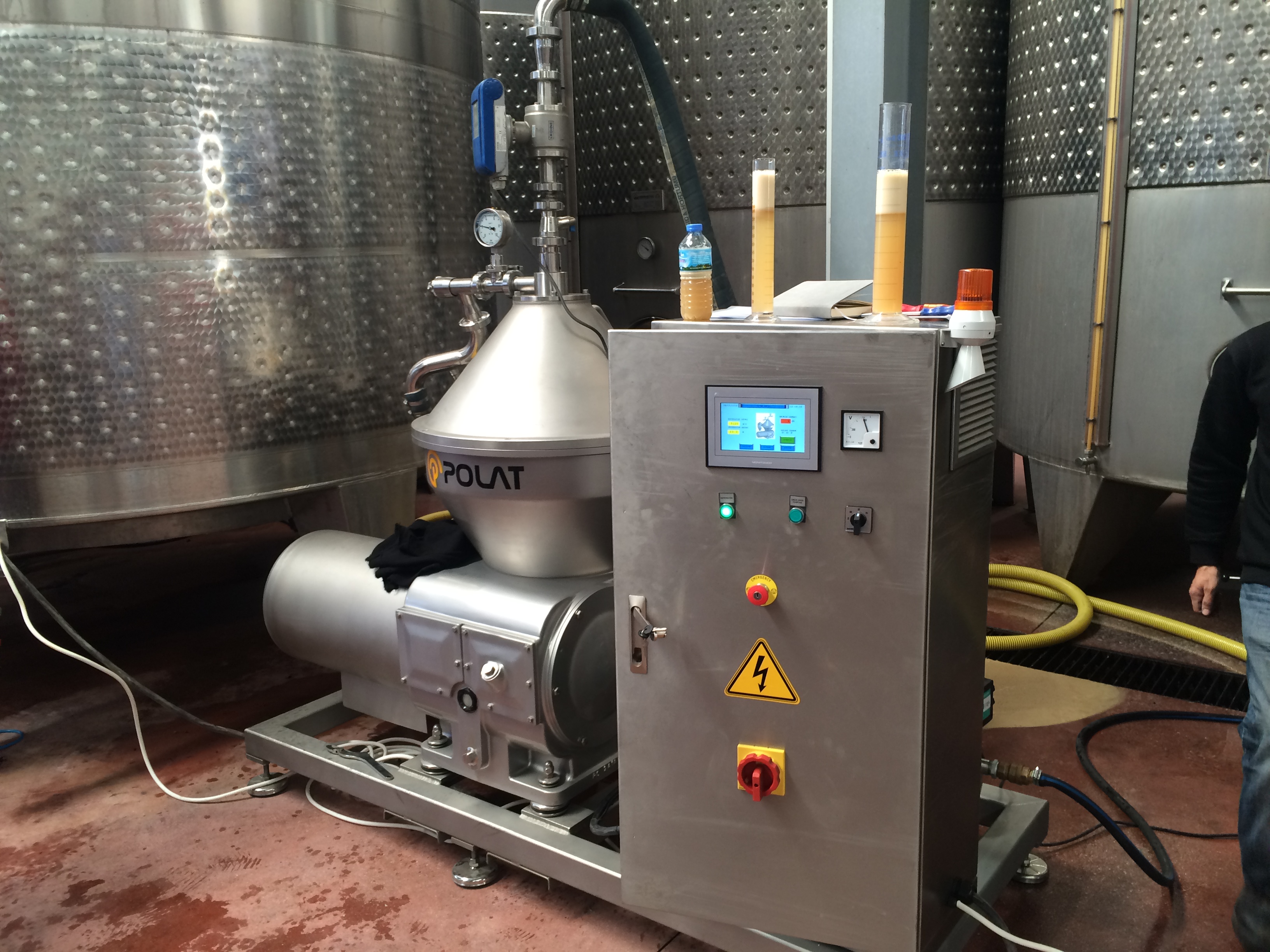
In this project, carried out at the production facility of a leading wine producer, our high-speed disc-stack separator system was commissioned for use in critical stages of production, from grape processing to final product quality.The primary objectives were to rapidly remove coarse and fine sediment from grape must, precisely separate residual yeast after fermentation, and achieve the desired clarity before bottling while preserving the wine’s balance of aroma, body, and color.
Process and Separator Engineering
Due to the delicate nature of its raw materials, winemaking requires precise process management to minimize the effects of temperature fluctuations, oxygen exposure, and mechanical stress.
Gentle Separation to Preserve Aroma and Body: Thanks to its specialized bowl and disc design, the system uses high centrifugal forces to remove unwanted suspended solids and yeast cells without compromising the bouquet or aromatic compounds that define the wine’s character.
Closed-Loop Design to Prevent Oxidation: Designed to meet food hygiene and quality standards, the enclosed system features stainless steel construction that minimizes contact between the wine and air or oxygen, helping preserve freshness and product quality.
Automatic and Controlled Discharge: The automation system can be precisely adjusted according to the turbidity of the grape must or wine. Combined with a self-cleaning mechanism, it ensures continuous production while minimizing product losses.
Key Deliverables and Added Value
High Visual Clarity and Consistent Quality: Sediment formation at the bottom of bottles was prevented, helping the product maintain its visual clarity and color throughout its shelf life.
Maximum Tank Utilization: The long settling times required for natural sedimentation were reduced to minutes through separator technology, increasing tank turnover rates and processing capacity.
Minimal Product Losses: Product losses caused by residual product retained in filter media, along with consumable costs associated with conventional filtration methods, were minimized.