

Green Extraction of Polyphenols from Olive Fruit, Seed, and Leaves via Supercritical CO₂ Technology
Key Findings and Details
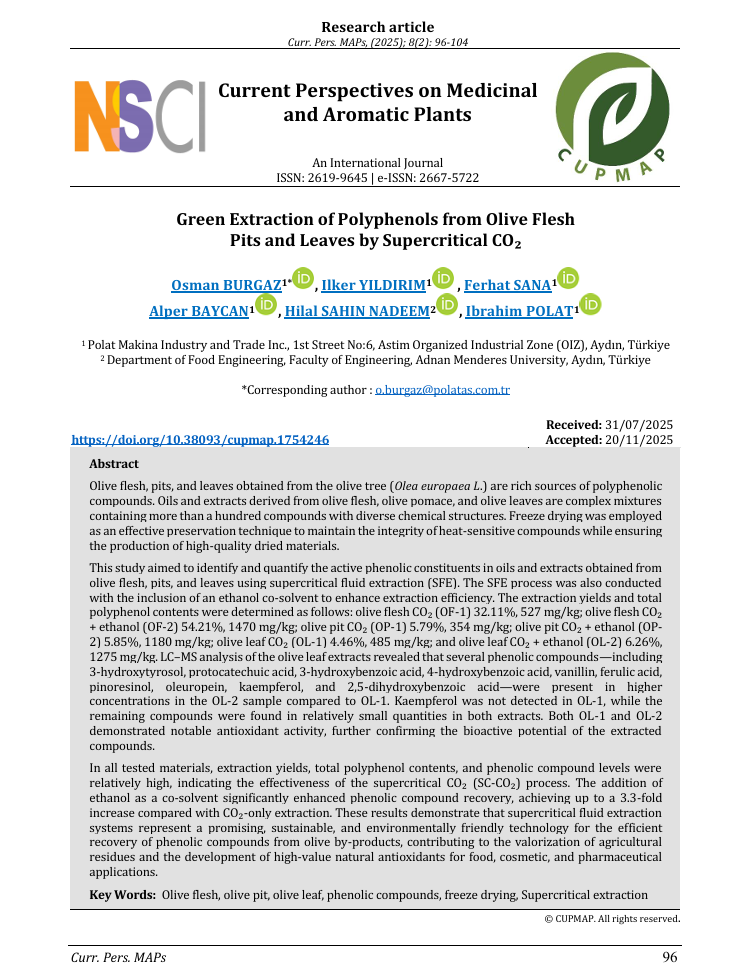
Enhanced Yield and Polyphenol Content: Compared to using standalone CO₂, adding ethanol as a co-solvent yielded significant increases of up to 3.3-fold in both extraction yield and total polyphenol content:
Olive Flesh: Oil yield rose from 32.11% to 54.21%, while total polyphenol content increased from 527 mg/kg to 1470 mg/kg.
Olive Seed: Extraction yield rose from 5.79% to 5.85%, while total polyphenol content reached 1180 mg/kg (up from 354 mg/kg).
Olive Leaves: Extraction yield increased from 4.46% to 6.26%, with total polyphenol content rising from 485 mg/kg to 1275 mg/kg.
Critical Bioactive Compounds (LC-MS Analysis): In ethanol-assisted olive leaf extract (OL-2), prominent phenolic compounds—led by the key bioactive constituent oleuropein, alongside 3-hydroxytyrosol, vanillin, ferulic acid, p-coumaric acid, luteolin, apigenin, and kaempferol—were detected in significantly higher concentrations.
Superior Antioxidant Capacity: The incorporation of ethanol enhanced the solubility of polar phenolic compounds, boosting the antioxidant activity (DPPH) of olive leaf extract from 5.98 µmol TE/g to 19.72 µmol TE/g.
These findings demonstrate that olive processing by-products (seeds and leaves)—rather than being treated as waste—can be transformed into high-value natural antioxidants for the food, cosmetics, and pharmaceutical industries.
Click here to read the full article.