
Strategic Transformation Areas Strengthening B2B Relationships

In today’s global competitive environment, establishing and strengthening business-to-business (B2B) relationships is of vital importance for industrial companies. In this process, trade fairs stand out not merely as events where products and services are showcased, but as strategic platforms where new partnerships are forged and existing relationships are deepened. Trade fairs offer a unique opportunity to directly manage face-to-face communication, product experience, and brand perception. In this article, we will examine how industrial trade fairs strengthen B2B relationships and discuss the components of successful trade fair strategies, drawing on the experience of Polat Makina, a company with a deeply rooted history in this field.
3 Major Contributions of Trade Fair Participation to B2B Relationships
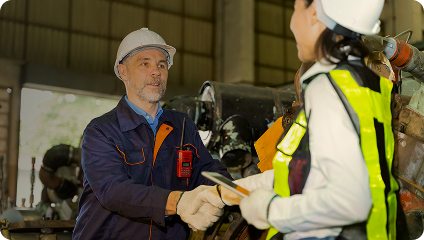
Direct Interaction and Bui lding Trust:Despite the rise of digitalization, interest in trade fairs continues to grow exponentially because trust remains one of the most critical elements in the B2B sector. When buying and selling high-value products such as machinery manufacturing, decision-makers want to inspect the products closely, discuss technical details, and communicate directly with the supplier. By enabling this physical and social interaction, trade fairs facilitate the formation of mutual trust between companies. The fact that Polat Makina exports to 44 countries and continues to expand its global network serves as proof of how valuable these face-to-face meetings are.
Marketing and Brand Positioning:Trade fairs provide an ideal foundation for companies to consolidate their market presence and showcase their innovative image. Interactive stand designs, live product displays, and participation in industry events highlight the strength and expertise of the brand. Trade shows also help companies keep their marketing strategies dynamic by offering the opportunity to closely observe competitors and analyze new industry trends. In line with this, Polat Makina showcasing its machinery at trade fairs demonstrates its technological capability and the emphasis it places on innovation.
Targeted Data Collection and Creating Business Opportunities: Trade fairs are environments with a high concentration of prospective customers and business partners. Strategically planned trade fair participation provides rich data collection opportunities to understand who the target audience is, as well as their needs and expectations. By establishing personalized communication during post-fair follow-up processes, this data accelerates the sales cycle and nurtures long-term B2B relationships.
Examples from Polat Makina’s Trade Fair Participations
As a global player in centrifuge and separation technologies, Polat Makina has effectively utilized the strategic importance of trade fairs for years. The strong network established through trade fairs plays a major role in the company housing 12 dealers and 13 group companies across 44 countries in both domestic and international markets such as Germany, Greece, Morocco, and Italy. The fundamental steps of developing a network through trade fairs include:
Market-Oriented Fair Selection: Taking into account the market dynamics of the 44 countries it exports to, Polat Makina ensures participation in leading industry trade shows. This approach not only strengthens ties with existing customers but also supports growth targets toward new markets such as the Far East, North America, and South America.
Innovation and Competitive Identity: The ambition and innovative mindset of the company's founders, Mustafa and İbrahim Polat, in machine manufacturing are reflected in their trade fair participation. In response to Italian competitors saying "you cannot build this machine," displaying the developed machine at trade shows proved that Polat Makina could not only be a manufacturer, but also rise to a position of leadership in technology. Such competitive success stories leave a lasting impression on fair visitors.
Post-Fair Follow-Up and Relationship Management: A successful trade fair strategy begins after the event ends. At Polat Makina, we regularly follow up on contact information gathered during the fair, stay in communication with potential clients, and offer them tailored solutions. Beyond a short-term sale, this continuous communication transforms into a long-term business partnership.
Based on all of the above, it would be accurate to describe industrial trade fairs as an indispensable part of the modern marketing mix. Trade shows offer a unique opportunity to strengthen B2B relationships. Elements such as face-to-face communication, product experience, and trust-building create value that digital channels alone cannot provide. Polat Makina's years of trade show experience clearly demonstrate that when used strategically, these platforms not only increase export figures but also establish a permanent brand identity in the global market. Therefore, industrial companies must view trade fairs not as an expense item, but as a strategic investment for the future to achieve a successful B2B growth strategy.